Home/Infographics/What’s in a Roof Health Report? A Visual Breakdown
Your Roof Health Report — Everything You Need To Know, In 48 Hours
The 6 Sections Of Your Roof Health Report
After every inspection, Element Roofing delivers a detailed Roof Health Report with photos, findings, and clear
recommendations — no pressure, just facts. This guide breaks down what’s in that report, what each section means, and why it matters for protecting your Indiana home and maximizing your insurance coverage.
Free Inspection Today
48hr
Report delivered after
every Element inspection
85%
Of roof problems are
caught early by inspections
65%
Of storm damage is
invisible from the ground
2x
Yearly inspections
recommended by pros
The 6 Sections Of Your Roof Health Report
Overall Roof Condition Rating
Your report begins with a clear overall assessment: is your roof in good condition, showing early wear, or in need of immediate attention? This summary gives you a straightforward starting point before diving into the details — so you know where you stand right away.
Photo-Documented Damage And Wear
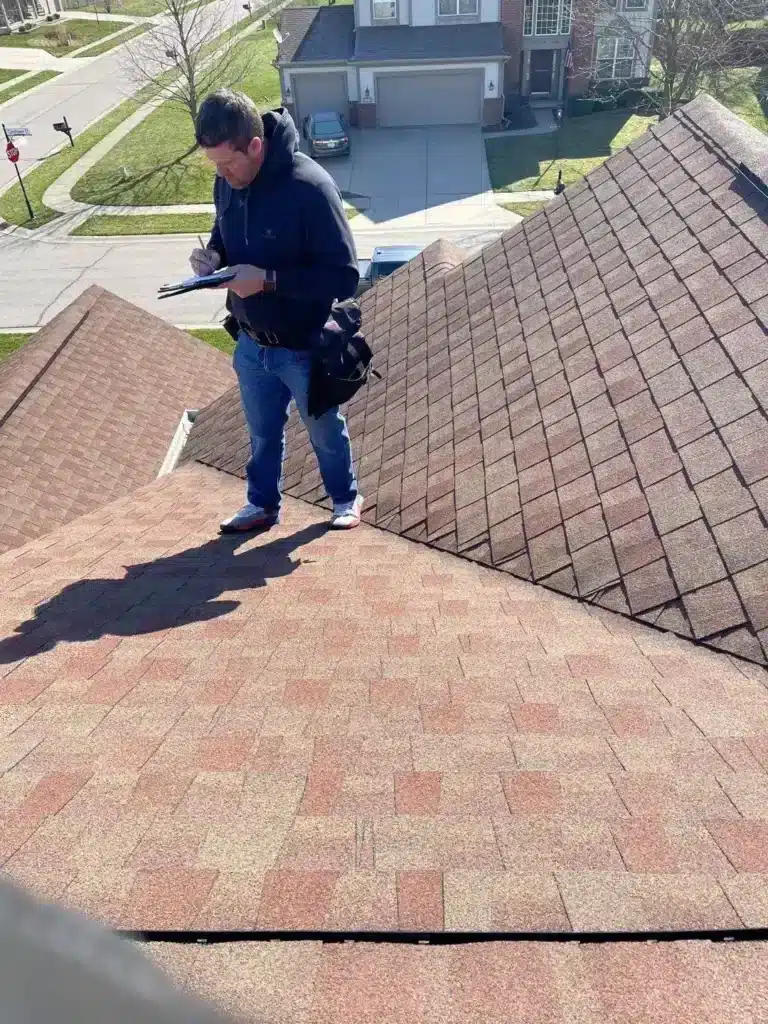
Every finding is backed by high-resolution photos with annotations showing exactly what was found and where. From cracked shingles to lifted flashing, you’ll see what your inspector saw — making it easy to understand the issues without climbing onto your roof yourself.
Gutter, Drainage, And Ventilation Review
This section details the condition of your shingles (curling, cracking, granule loss), flashing around chimneys, vents, skylights, and valleys, and all sealant and caulk points. These are the components that take the direct hit from Indiana’s hail, wind, and freeze-thaw cycles.
Excessive Granule Loss In Gutters And Downspouts
Your gutters, downspouts, soffit vents, and ridge vents are evaluated for clogs, damage, and proper airflow. Poor drainage leads to foundation problems, and inadequate ventilation causes ice dams, trapped moisture, and premature shingle aging — all critical in Indiana’s climate.
Repair Vs. Replacement Recommendation
Based on the findings, your report includes a clear recommendation: targeted repairs, monitoring over time, or full replacement. You’ll understand exactly why each recommendation is made and what happens if action is delayed — no sales pressure, just informed options.
Insurance Claim Documentation (If Applicable)
If storm damage is identified, your report includes the documentation needed to support an insurance claim — timestamped photos, damage descriptions, and scope of work. This file is designed to be shared directly with your adjuster to ensure fair and accurate compensation.
How To Use Your Roof Health Report
Share it with your insurance provider if storm damage is documented — it's designed to support your claim directly
Keep every report on file — a history of inspections shows proactive maintenance and strengthens future claims
Use the repair vs. replacement recommendation to plan and budget — no surprises when the time comes to act
Review photo evidence carefully — understanding what your inspector found helps you make confident decisions
Schedule your next inspection based on the report's timeline — don't wait for visible damage to appear inside