
50–70
Freeze-thaw cycles per winter in Central Indiana — accelerating deck deterioration
Damage surface threshold — above this, replacement almost always beats repair
Year realistic asphalt shingle lifespan under Indiana freeze-thaw and hail conditions
Time for mold to begin establishing after water reaches ceiling drywall or insulation
A single leak with solid, dry decking around it means a targeted repair can stop the damage. Fast-moving Indiana spring storms regularly lift shingles or crack isolated sections without affecting the full roof system.
A handful of shingles blown off an otherwise healthy roof should be replaced in-kind. Indiana's tornado-alley straight-line wind events regularly remove patches without damaging the decking or neighboring shingle sections.
Chimney flashing, pipe boot, or skylight curb separation is a repair — not a replacement trigger. These are maintenance failures, not system failures. In Indiana's freeze-thaw climate, flashing sealant cracks regularly and should be addressed proactively.
A younger roof in good condition throughout should have significant service life remaining. If damage is localized and the rest of the system is sound, repair preserves that investment.
Industry threshold: when damage affects less than a third of the surface area, repair is almost always more cost-effective than replacement — especially when the underlying deck and insulation are dry and intact.
Indiana asphalt shingles reach end-of-life around 20–25 years under hail and freeze-thaw. Repairs become band-aids on a failing system — replacement delivers a fresh warranty and full insurance coverage.
Leaks in two or more unrelated areas mean the underlayment has failed system-wide. Indiana ice storms frequently expose pre-existing underlayment weakness — scattered leaks after one event signal whole-system failure.
Deck sagging or soft spots signal structural compromise from long-term moisture — often only visible after tear-off. Indiana freeze-thaw repeatedly pushes water into shingle cracks until the deck weakens from within.
Class 4 hail producing spatter marks across the full roof has exhausted granule protection on every shingle — not just visible ones. Indianapolis adjusters frequently total roofs after 1.5-inch-plus strikes.
When repair quotes exceed 40–50% of a replacement quote on a roof over 15 years old, replacement almost always wins. It resets the warranty, insurance rating, and deferred maintenance clock simultaneously.
| Factor | ✓ Repair If... | × Replace If... |
|---|---|---|
| Roof Age | Under 12 yrs | Over 20 yrs |
| Damage Extent |
Under 25–30% of surface |
Over 30% of surface |
| Leak Locations |
Single, isolated spot |
Multiple spot pattern |
| Deck Condition |
Solid and dry |
Soft, rot, or sagging |
| Granule Loss |
Minimal or localized |
Widespread or bald areas |
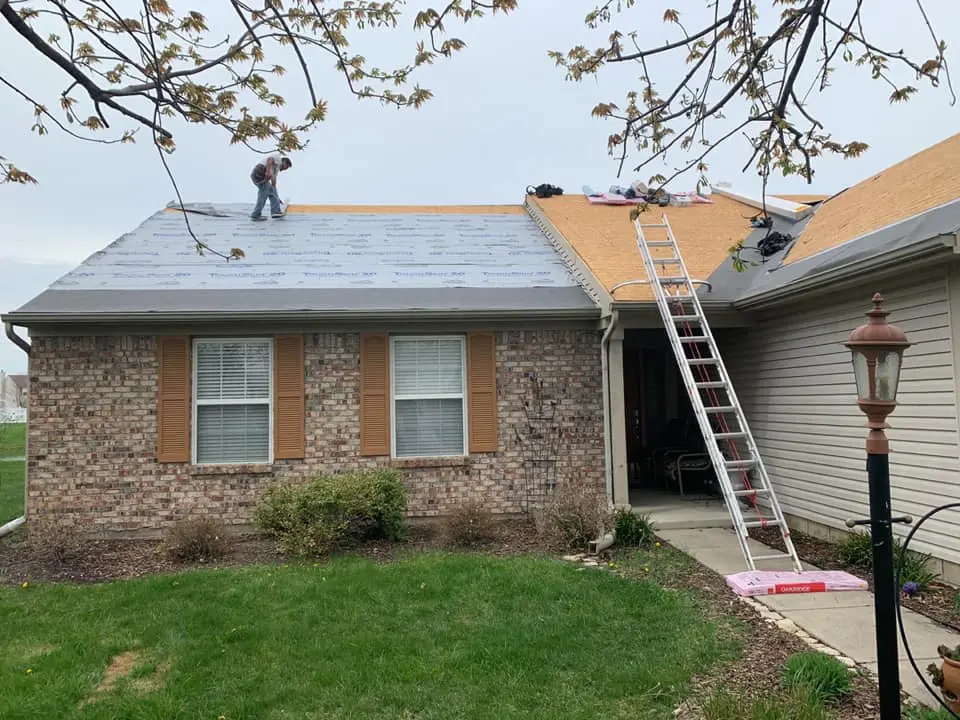

Indiana Hail Is a Regular System-Level Event Central Indiana ranks among the most hail-active markets in the Midwest. Class 3–4 hail events frequently produce damage patterns that total
Freeze-Thaw Cycles Accelerate Deck Failure Indianapolis averages 50–70 freeze-thaw cycles per winter. Each cycle forces water into existing shingle cracks and expands them — a process that
Insurance Claim Timing Affects the Decision Indiana homeowners insurance claims have filing deadlines — most carriers require notice within 30–60 days of a weather event. Documenting